
We help designers build a business they enjoy.
Better pricing, better profits and better balance.
If that’s what you need, you’re in the right place.
-
We work with creatives to help them build a better business. One they can enjoy that doesn't run them into the ground. We've walked in your shoes. Now we combine that experience with current research to help you get there faster.
-
We write a weekly article — here, on LinkedIn, Substack and Instagram — about pricing, positioning, culture. It’s material design school never taught you.
-
We actively research locally, nationally and globally — from design maturity to the impact of AI — and share what we learn.
Learn more. -
We can advocate without fear nor favour . We’ve successfully overturned free pitch requests and had a RFQ rewritten.
More detail.
We mentor creatives about the business of design.
Many mentors and coaches come from a business background.
We flipped the switch — we're design practitioners.
Our knowledge and expertise comes from founding, managing and growing a successful creative studio.
The internet is teaming with coaches, mentors and consultants of all shapes and sizes.
Why choose the Design Business Council?

We stay current
We’re curious. Not just about Australian design, about global design businesses. Current research includes: what AI actually means for the design industry, what's driving designer burnout, what clients really think.

We walk the talk
We understand creative businesses are unique to other service businesses. They need different systems and approaches to traditional small businesses.

We’re practitioners
We've had skin in the game. We've run a studio, made payroll, and had our own home on the line. Most advisors haven't.

We’re evidence-based
Not opinion-based. We research Australian design practice continuously, so what we tell you is backed by current data, not what worked for someone, once, a decade ago.

We're invested in the industry, not just our clients
We're invested in the industry, not just our clients. When the City of Sydney offered designers $3,000 for a NYE identity project, we didn't just complain about it — we called the CEO. The budget was revisited.
We advocate
We’re embedded in the Australian design ecosystem. We volunteer and partner with associations through committees, mentoring and boards. We actively advocate on behalf of creatives.
We research the future of design business — from AI to design maturity.
We know building a sustainable, profitable design studio means continually reinventing who you are and what you do. And we know from experience it's difficult to find the time to work on your business when you are answerable to short-term client demands.
That's where we come in — we've made the time to gather, analyse and share what we learn from other Australian creatives.
AUSTRALIAN DESIGN MATURITY RESEARCH 2019
Research that changed how we see design’s impact
In 2019 we ran Australia's first study into design maturity.
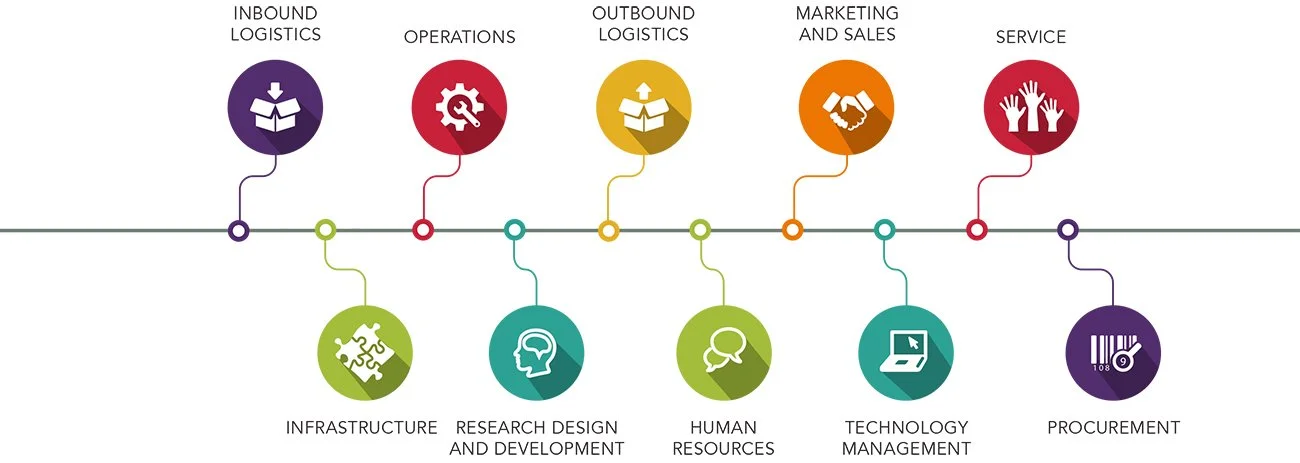
Design maturity describes how well a business's design practices and processes are set up to reliably and sustainably deliver good work. A number of global research projects have explored design maturity, but it's rarely been studied in Australia.
We worked with ten design leaders and one of their key clients each, mapping their practices against an adapted version of Porter's Value Chain. One finding stood out: designers can add value at every stage of a business, not just in marketing and communications. It reshaped how we think about where design fits — and it's now a core part of how we mentor.
Watch Greg break down the research and the model below, or get in touch if you'd like to know what else we found.
SELF-LED RESEARCH IN CONJUCTION WITH STREAMTIME AND NEVER NOT CREATIVE
COVID: A Snapshot of the Australian design industry
In early 2020, as lockdowns hit, we teamed up with Streamtime and Never Not Creative to run a survey capturing how Australian creative businesses were coping in real time — what was working, what wasn't.
It's a smaller, faster piece of research than our design maturity study, but it's a genuine snapshot of an extraordinary moment for the industry.
It is well worth a read. Download it here.
HAPPIER, HEALTHIER CREATIVE BUSINESS CANVAS
The blind spots that quietly sink creative businesses
Want to know more about the canvas? Contact Greg
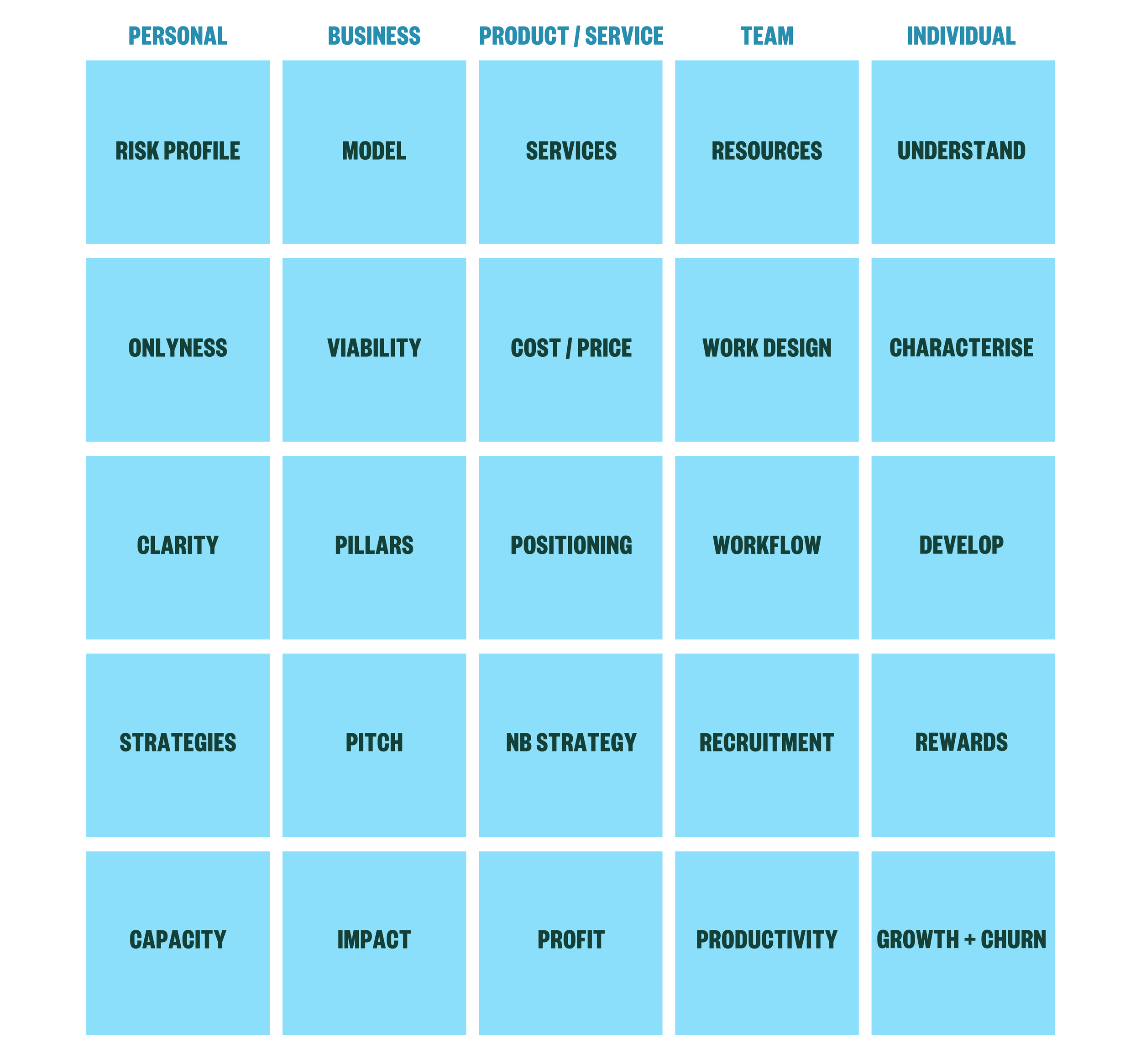
Most creative business owners fix problems as they show up — a cash flow crunch, a difficult client, a burnt-out team member.
We built the Happier, Healthier Creative Business Canvas to catch problems before they show up. It's a practical framework, grounded in academic research and 30 years of running a studio, that maps 25 dimensions across five areas of your business: personal, business, product/service, team and individual.
Use it to self-diagnose what's quietly at risk, before it becomes urgent.
The canvas was developed by DBC, and Andy Wright, CEO of Streamtime.
This is a unique combination of DBC's business experience, ongoing research and knowledge from mentoring Australian creative businesses, Streamtime's data and metrics and Andy's understanding and passion for improving the mental health of creatives.
Want to know more about the canvas? Contact Greg
DBC is a trusted source of information.
Interested in the business of design? How to manage a profitable, enjoyable creative business? That’s what we research and write about in our weekly article.
It’s always relevant, always practical.
We also share information on LinkedIn (follow Greg or Carol) and in industry publications.
And we wrote a long-form book titled The Business of Design and we regularly publish short, practical ebooks on finance, bookkeeping, LinkedIn, Risk management and Benchmark wages. All written specifically for Australian designers.
Publications
We put a lot of this thinking into writing, from single articles to short ebooks to a long-form publication. Here's everything we've published, so you can find what's useful to you right now.
-
A practical guide to bookkeeping or employing a bookkeeper. It includes all the information creatives need to run a profitable, sustainable business.
-
A 44 page ebook specifically written for designers wanting to understand bookkeeping for a creative business.
-
A 52 page ebook specifically written for creatives wanting to find the ‘right’ clients and new business using LinkedIn.
-
This e-book identifies five potential areas of risk to a creative business: risk to your reputation; risk of unplanned growth; risk to you or your employee’s health; risk of financial insolvency; risk to your intellectual property and risk due to failure to innovate.
-
A guidebook for rewarding creatives including benchmark wages, the skills needed for 28 job titles, freelance rates, and five alternative ways to reward employees.
-
The Business of Design is the essential reference for all Australian design businesses. It contains all the information needed to start, manage and grow a design studio.
We advocate for designers.
Our onlyness is that we've had skin in the game — we've run a studio, made payroll, and had our own home on the line. Most advisors haven't.
That's why we understand the free pitches, the 'trial' projects, and how hard it is to break in as an emerging designer.
DBC is an independent advisor, so we can speak up for Australian design practitioners without fear or favour.
ADVOCACY AGAINST UNDERPAID PITCHING : JULY 2024
The City of Sydney submission for NYE visual identity
The City of Sydney called for submissions (July 2024) to create the visual identity for their New Year's Eve extravaganza. Shortlisted designers were offered $3,000 to create and develop their concept — and from that, one would be commissioned. At industry rates, $3K doesn't buy much time, so anyone submitting would effectively be subsidising the City of Sydney's design budget.
The standard you walk past is the standard you accept, and we didn't think this was acceptable.
Was this laziness, incompetence, or just not knowing better? Probably the third — but that's not an excuse. There are better ways to choose the right design candidate; they'd just not thought thought it through. It also excludes culturally diverse agencies who typically can't afford to gamble on unpaid work.
So we contacted Monica Barone, CEO of City of Sydney. She saw the email and called — while on leave — to say she understood the issue, respected the design industry, and had asked her team for more information.
The outcome
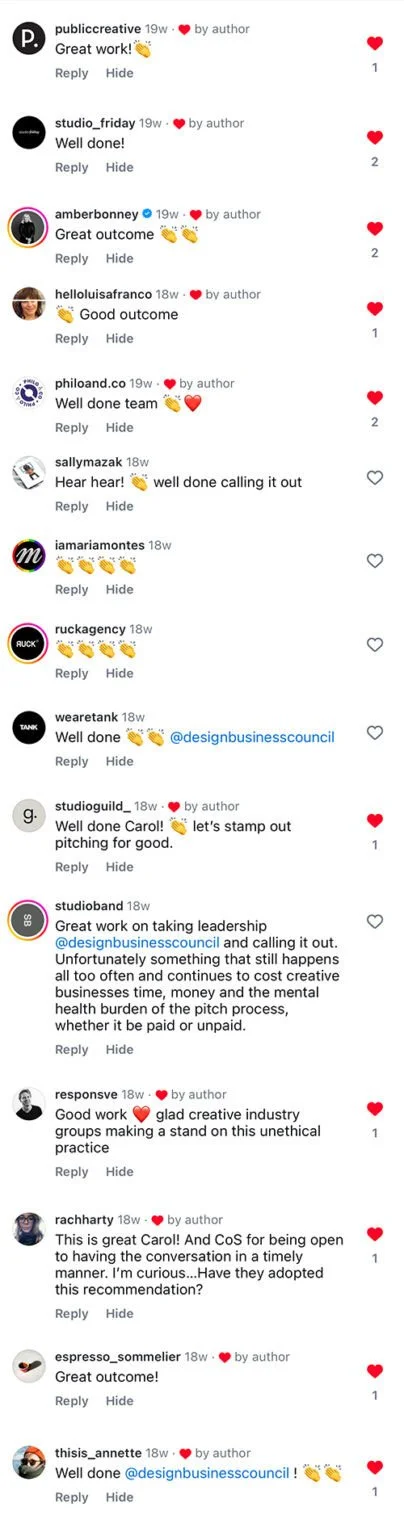
Late July 2024, the City of Sydney paused their EOI to re-examine the process. They'd aimed to avoid a free pitch by paying $3,000, they now understand that's not sufficient. They contacted AGDA for guidance, and we stand with AGDA on their free pitch stance.
If you're asked to pitch for next to nothing, here's the process we think is fair:
Write an EOI. Interview appropriate designers. Select one to proceed at an agreed fee.
That's a fair, balanced standard for everyone involved — and worth sending to whoever's asking you to work for free
ADVOCACY FOR EMERGING DESIGNERS
Minimum standards for emerging designers
In 2018 when Never Not Creative was founded, DBC were part of an initiative writing minimum standards for internships. That pledge is still relevant to all emerging designers entering our industry:
Signatories to the pledged to support minimum standards
Aer Design • AGDA • Anthologie • APR • Atollon • Ball & Doggett • Barely Managing • BHD • BossMan • Box Hill Institute • Bright Yellow • BWD Strategic • Creative Spaces • Creative Womens Circle • CREAYTIVE PTY LTD • Dense Magazine • Design Business Council • Design by Davey • DLF Creative • Edison • Fluid • Folk • Freelance Designer • Frost*collective • FutureBrand Australia • Geteogy • Goldi • Goodness • Grade • Green Light Creative • Groszcolab • Harcus • HM. • Hound & Bone • Hoyne • Hundredweight • Image Workshop • Isgro • IVE • J.Clausen Creative • Jalapeno • Key 2 • Ki Creative • Landmark • LBD Studios • Leon Borrack • Louise B Creative • Love + Money • Love and Money • Mammoth • Milo • Mindly Studio • Minta Viski • Motherbird • Nani • Never Sit Still • Newledge • Nook Studios • Onfire Design • Our revolution • Paper Moose • Plutonium • Portable • Poyo • Public Journal • R-Co • Raine & Makin • Rare • Ripe Designs • RPS Group • Savanah • Scampi • Self-titled • Shillington • Storyfolk • Streamtime • Stuart Pettigrew • Studio Chenchen PTY LTD • Studio Papa • Synergy • Tandem • Tangent • The Brand Foundry • The Brownbill Effect • The Child in Me • The Design Dept • The Esplanade • The Offices • The Solutionist • The Sum Of • Tom Lucey • Two from Two • USTWO Interns • Vaulter • Written and Recorded • Young Bloods •
-
We sign a contract with the intern/emerging designer that mutually states the commitments and responsibilities of both parties, including duration, outcomes and other protections.
We will clearly state if a permanent employment opportunity exists at the beginning of any internship. This doesn’t mean we guarantee a position for the intern.
Our internships will be of a fair and reasonable timeline: a minimum of around 20 days and not longer than 72 days.
We’ll set and record goals that are negotiated between the emerging designer and us before the internship/employment commences.
We will ensure there is an interim as well as a final review provided to the emerging designer according to criteria set out in the goals.
We provide an induction with the emerging designer on commencement of their contract.
We’ll provide the emerging designer with a mentor/buddy to manage the relationship and their experience. The mentor/buddy will have the ability to assist where necessary.
We will take into account an intern’s work/life balance when determining the days/times of the internship.
We integrate interns into every aspect of our business, including social, team and whole of company activities.
We commit to opening up our business for the intern to understand everything from how we work, who we do work for, to how our business operates successfully.
We’ll ensure our workplace is safe and healthy for all of our people – employees and interns.
Internship opportunities are available for everyone regardless of race, belief, cultural background, or gender.
Our internship will actively focus on helping the intern prepare for their next stage: either full time position, interviewing or starting their own business.
We support paying interns and emerging designers at the very least the national minimum wage.
We understand that university students who receive course credits for their internship are not required to be paid, but we will aim to pay them the above rates whenever possible.