
We help designers build confidence around the business of design.
Not sure where to start?
Let's talk — no pitch, just a conversation
Services
We offer a range of services at different price points to meet the needs of every creative.
If you have specific challenge we're happy to work with you to create a bespoke program.
-
Three months of one-on-one mentoring to clarify your business positioning and direction — no template, no off-the-shelf framework, focussed on you and your challenges.
-
Stop claiming impact. Start measuring it.
Six weeks. One client project. A repeatable way to prove the impact of your design work. -
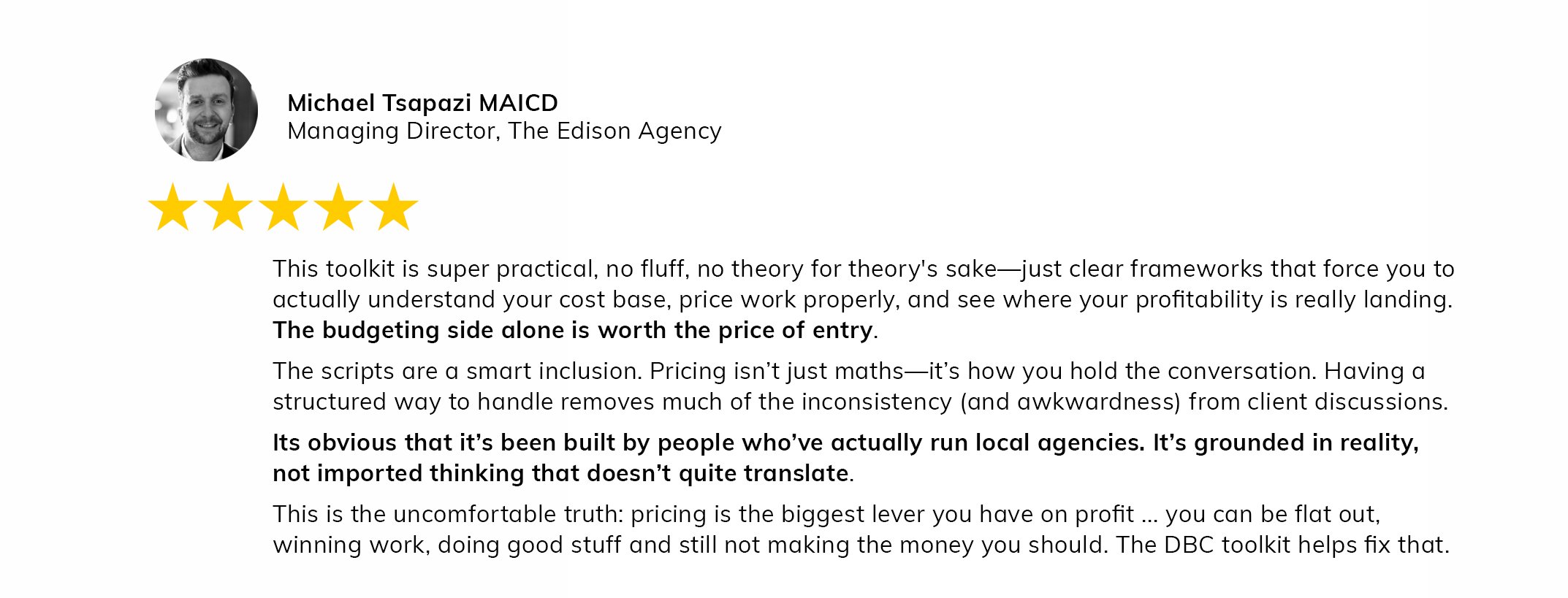
A DIY toolkit to help creatives price confidently, talk money comfortably, and profit from your hard work.
It’s a proven framework to understand their costs, establish profitable pricing and have better conversations about money.No complicated financial jargon.
No generic business advice.
Just practical tools designed specifically for creative businesses. -
Perfect to discuss/unpack unexpected challenges. Often used by those who need a sounding board before they make a tough decision.
-
A series of practical, relevant publications, all written specifically for Australian creatives by Australian design practitioners.
Here’s our publications.
The COMPASS mentoring program
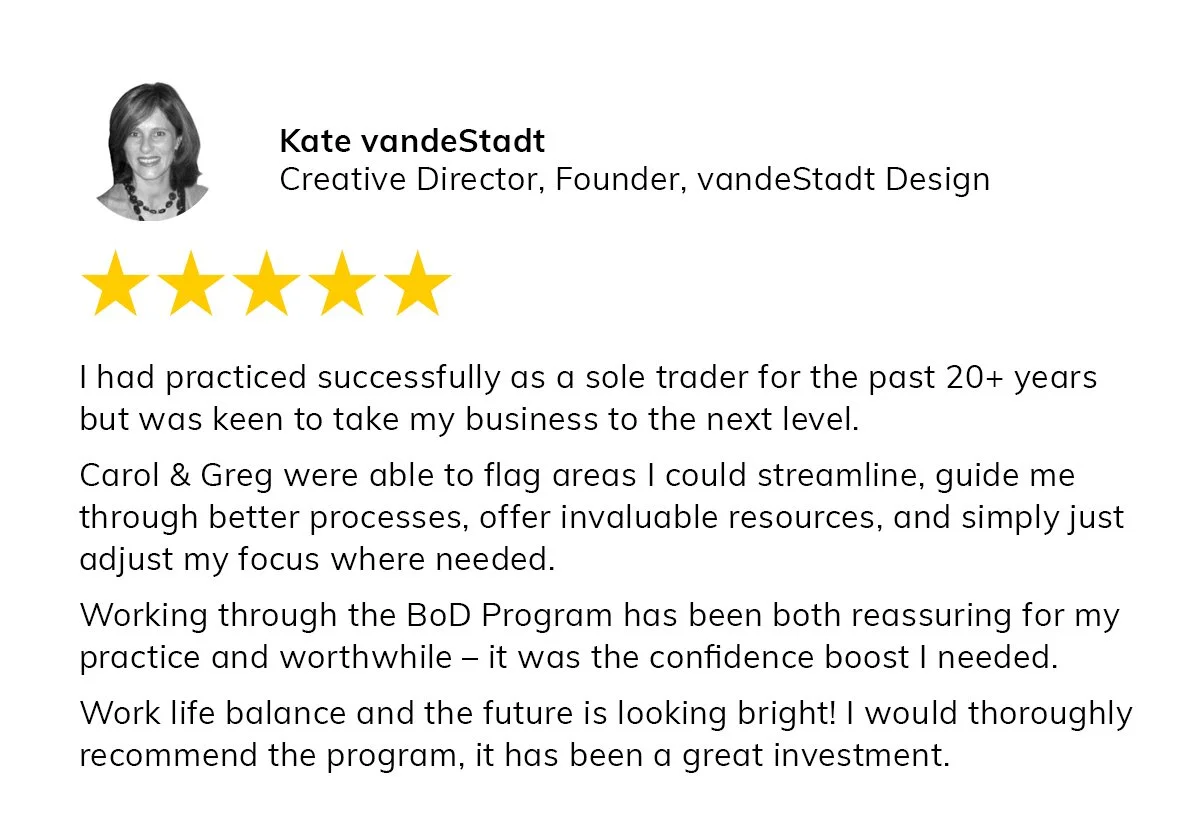
A three-month program for design business owners wanting clarity on their business positioning and direction.
Are you looking for accountability?
Working solo or in a small management team, there's often no one checking in on whether you actually did the thing you said you would. That's where we come in.
Each month we work with you to identify opportunities, develop practical actions, and keep you accountable. Between sessions, you've got access to us and our tools for ongoing support.
Can you commit to 3-months?
Change doesn’t happen overnight. It takes time to unpack your business and explore what's actually possible — which is why this isn't a single session, it's a process.
Each month, we identify opportunities, develop practical actions, and hold you accountable for implementation. Between sessions, you've got access to us, our tools and resources, and the support you need to keep momentum going.
If that sounds good, this program is for you, let’s talk.
This program is for designers who want to …
take control of their business
question what they do and who they do it for
clarify their business direction and priorities
improve profitability and confidence around pricing
walk away from the ‘wrong’ clients and find ‘the right’ clients
develop services clients genuinely value
reduce founder dependency and get more freedom
build a healthier business less reliant on referrals
work fewer hours, more profitability.
Do you feel like you've lost your way?
Clients can DIY more than ever, and some parts of the industry are disappearing.
If you're not sure where you fit anymore, COMPASS gives you clarity on positioning and direction.
Over three months, we work one-on-one with you each month to identify opportunities, build practical actions, and keep you accountable. Between sessions, you've got access to us and our tools for ongoing support.
Three months, one-on-one. $2,200 inc GST monthly x 3 = $6,600 total commitment.
The IMPACT program
Six weeks. One client project.
A repeatable methodology for proving the impact of your design work.
Are you struggling to stand out from the crowd?
Every design agency says it's strategic. That's a problem — when everyone talks strategy, research and workshops, clients end up comparing price, portfolios and personalities instead.
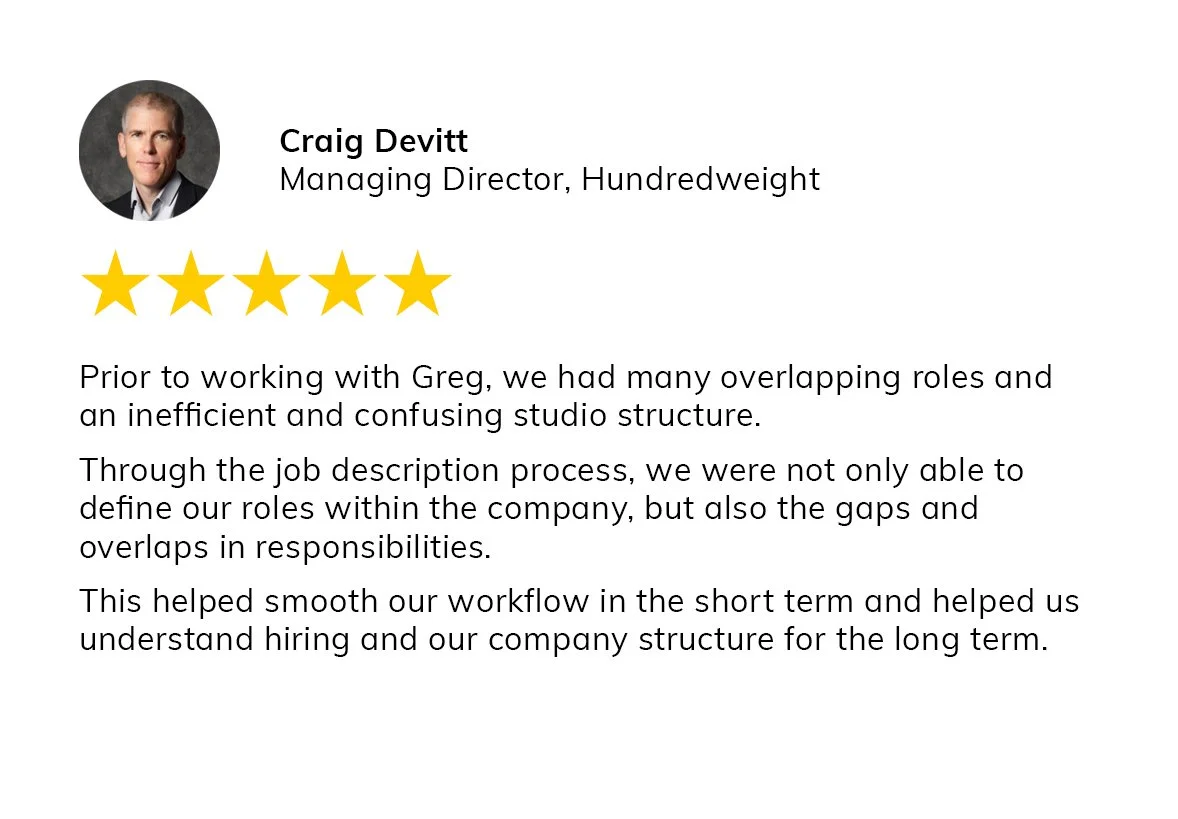
IMPACT reframes the conversation. Working with one of your own clients, you'll apply a documented design impact methodology — mapping stakeholders, building strategy, and demonstrating measurable impact.
Over six weeks you'll work on one of your own clients — not a case study or 'persona' client. Together we'll look beyond the brief to understand what's really happening in their business, where the opportunities are, and where design can make the biggest difference.
Do you want to measure design impact?
You'll finish with a complete Design Impact Strategy for your client — a repeatable methodology, and a much better way of explaining the value of your work.
It's one thing to say you're strategic. It's another to prove it.
Are you looking for accountability?
Six weeks, one client, one deliverable — there's no room to let it slide. Each week we check in on progress and keep you moving toward a finished strategy you can actually use.
This program is for designers who want help…
measuring the impact of design
building a documented methodology they can use again and again
writing a completed strategy for one of their existing clients
talking about the value of design backed by proof
standing out in pitches
to stop competing on price alone
applying a repeatable process to future clients.
Every design agency says it's strategic.
That's a problem — when everyone talks strategy, clients end up comparing price and portfolios instead.
IMPACT changes the conversation.
Working with one of your clients over six weeks, you'll apply a documented methodology to measure the social, environmental and economic impact of your design work — not just claim it.
You'll walk away with a completed Design Impact Strategy and a repeatable process for every future client. Supported through 3×1hour zoom sessions and consistent email conversations.
Six weeks, one project, measurable outcome. $5,500 inc GST.
The Costing, Pricing Profit toolkit
Stop guessing what to charge.
Start building a more profitable design business.
This toolkit explains
the minimum you need to charge to run a profitable business
whether your current hourly rate is making, or costing you money
how much revenue you need to hit your financial goals
how to present your pricing with confidence
what to say when clients push back on fees or ask for a discount
how to move away from guesswork to a repeatable pricing process.
If that’s the kind of clarity you want, this toolkit is for you.
What’s included…
a dynamic calculator to cost your real rates
a budget templates so you can stop guessing what you really need
pricing scripts for the difficult client conversations about money
the psychology of pricing — because sometimes it’s not about cost at all
pricing options for different clients – is one price fair for everyone?
a roadmap to move your business up the pricing scale
how to identify the ‘right’ profitable client.
Working hard but not making profit?
It's not a client problem.
It's a pricing-by-guesswork problem.
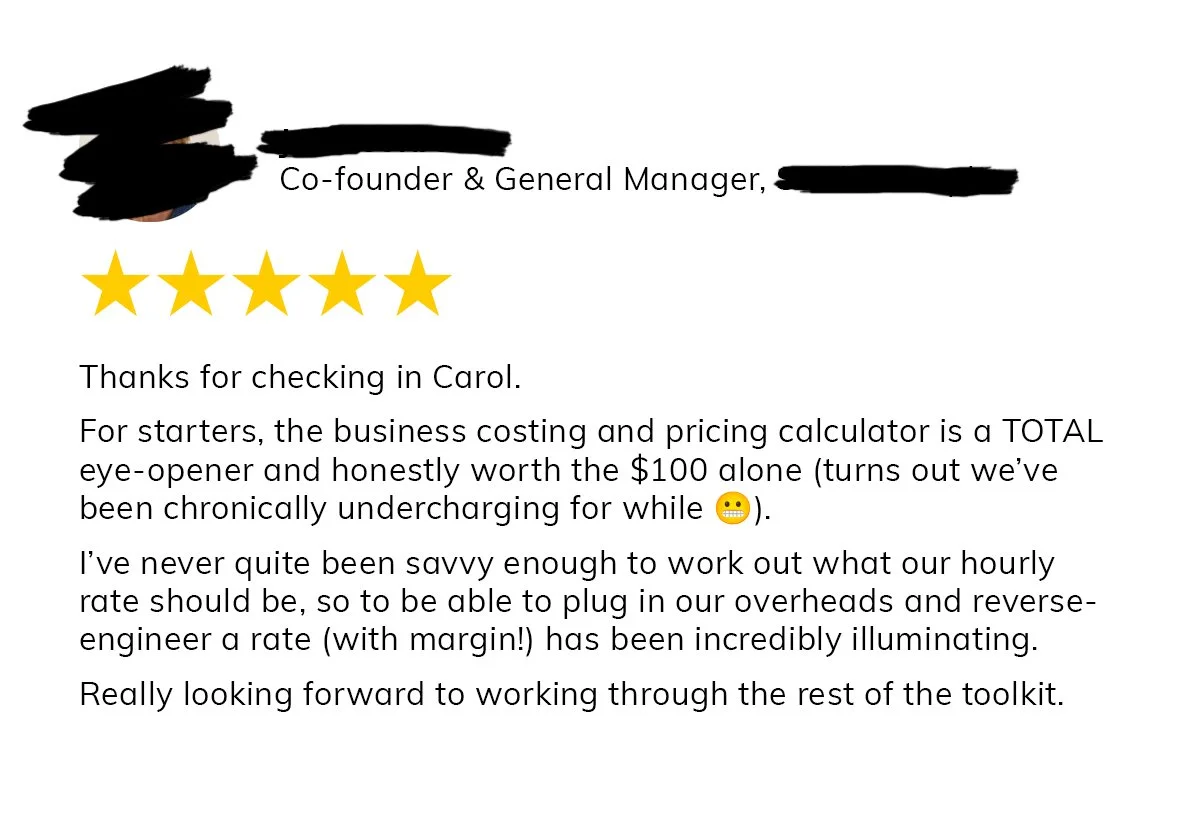
This toolkit gives you the real numbers: what it actually costs to run your business, what to charge, and what to say when clients push back.
A calculator to find your true rate, a budget template, and scripts for the money conversations you've been avoiding. It's the exact toolkit we use in mentoring — packaged so you can run it yourself.
Instant download. $100 + GST.
Issue-based mentoring
Need to discuss a problem or help to see what’s ahead?
Need a sounding board before a tough decision?
Single-issue mentoring works for solo operators worried about what they can't see, small teams needing a devil's advocate or a business owner wanting to talk over a momentus decision.
It’s not a full program, just a focused discussion with someone who's been there.
We've made payroll, had our own home on the line running a studio, and mentored hundreds of creative businesses since. We know what works — and what doesn't.
One 60 minutes session: $500 + GST.
Perfect for unexpected challenges
Sometimes you don't need a full program, you just need a focused discussion with someone who gets it. That's us.
We've experienced or heard every issue that confronts a creative business owner. We know what works in what situations and we can apply that to your situation.
One session, 60 minutes, $500 + GST.
Email and let’s book a time that works for you.
Prefer to learn at your own pace first?
We also write — a free weekly article, on LinkedIn, in The Business of Design, our book and in shorter guides on specific topics.
-
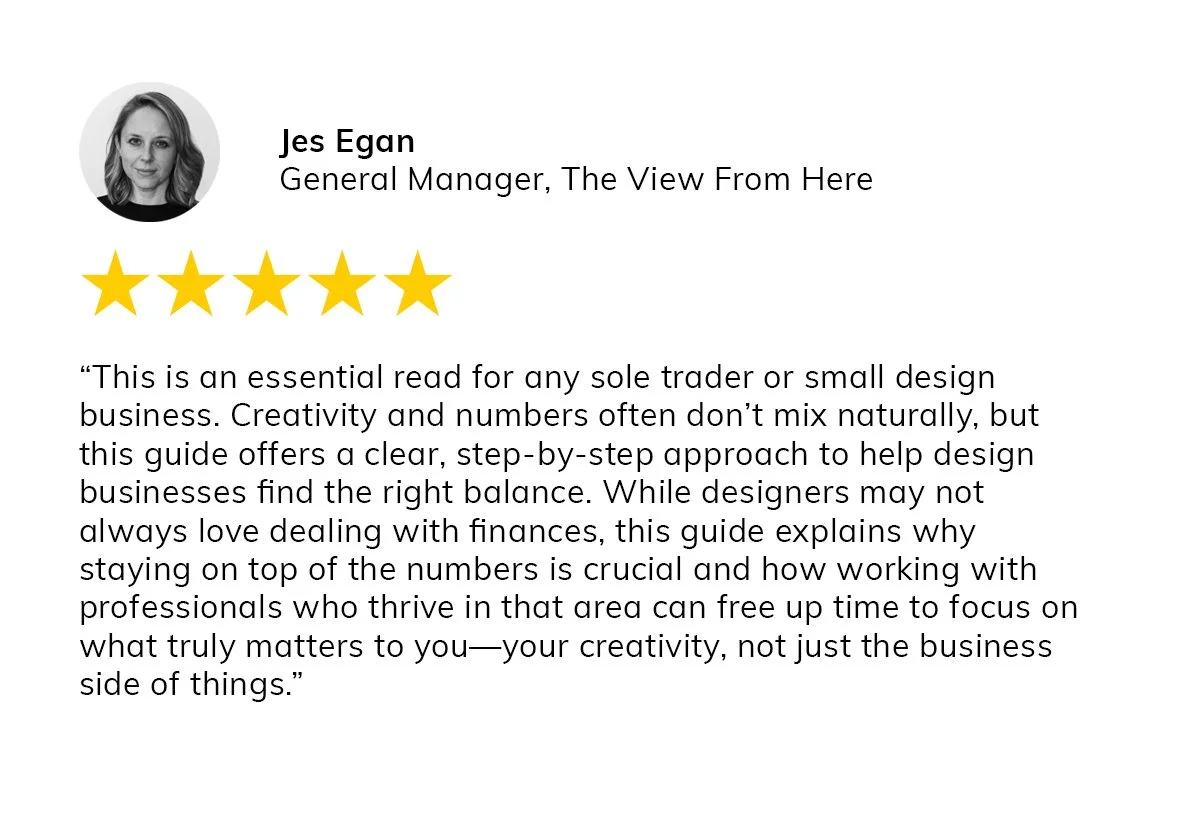
A practical guide to managing the finances of a creative business. It includes all the factors creatives need to run a profitable, sustainable business.
-
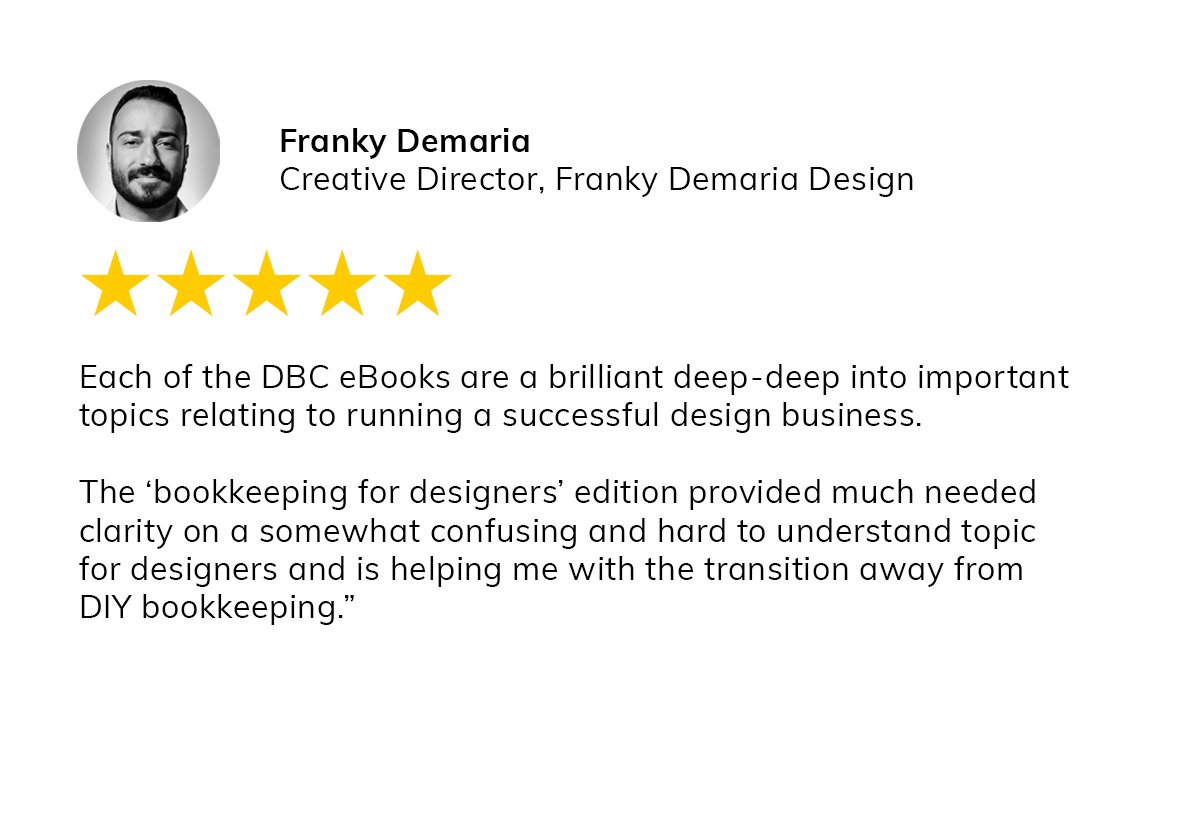
A 44 page ebook specifically written for designers wanting to understand bookkeeping for a creative business.
-
A 52 page ebook specifically written for creatives wanting to use LinkedIn to find the ‘right’ clients and new business to suit their interests and their skillsets.
-
This e-book identifies five potential areas of risk to a creative business: risk to your reputation; risk of unplanned growth; risk to you or your employee’s health; risk of financial insolvency; risk to your intellectual property and risk due to failure to innovate.
-
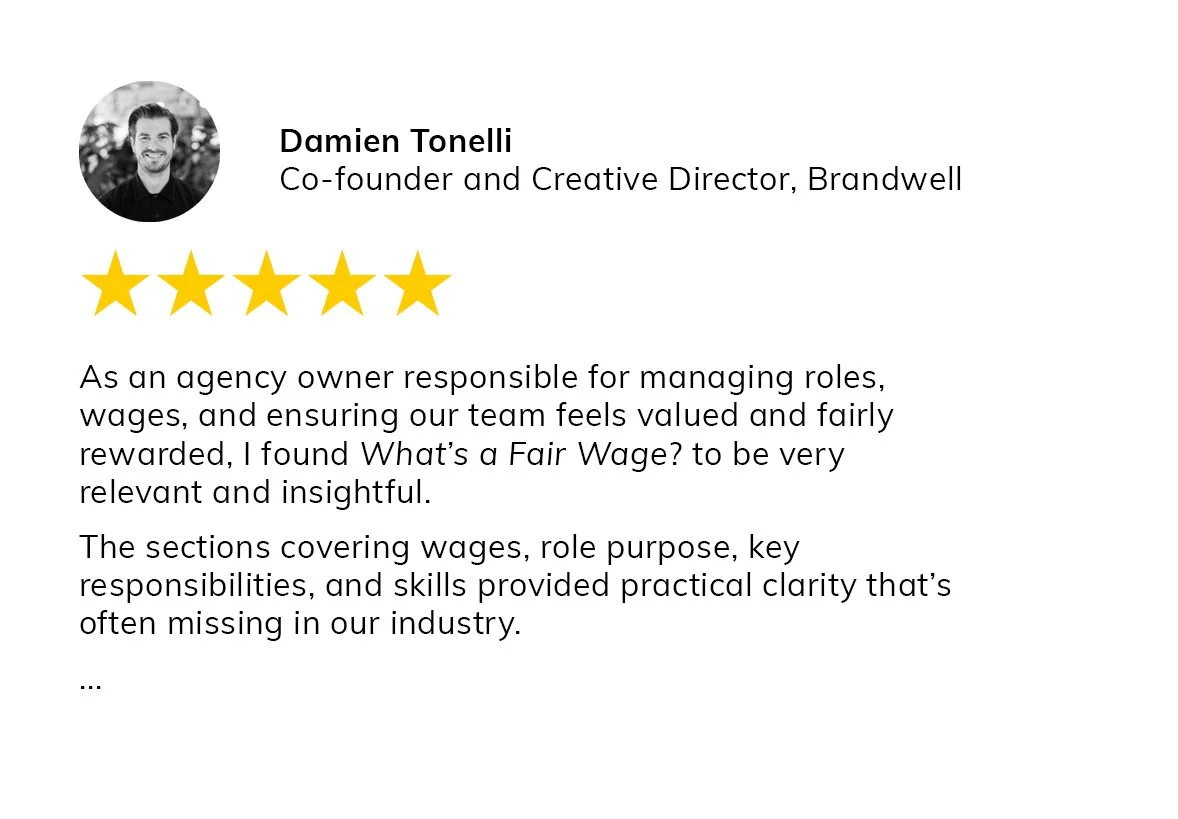
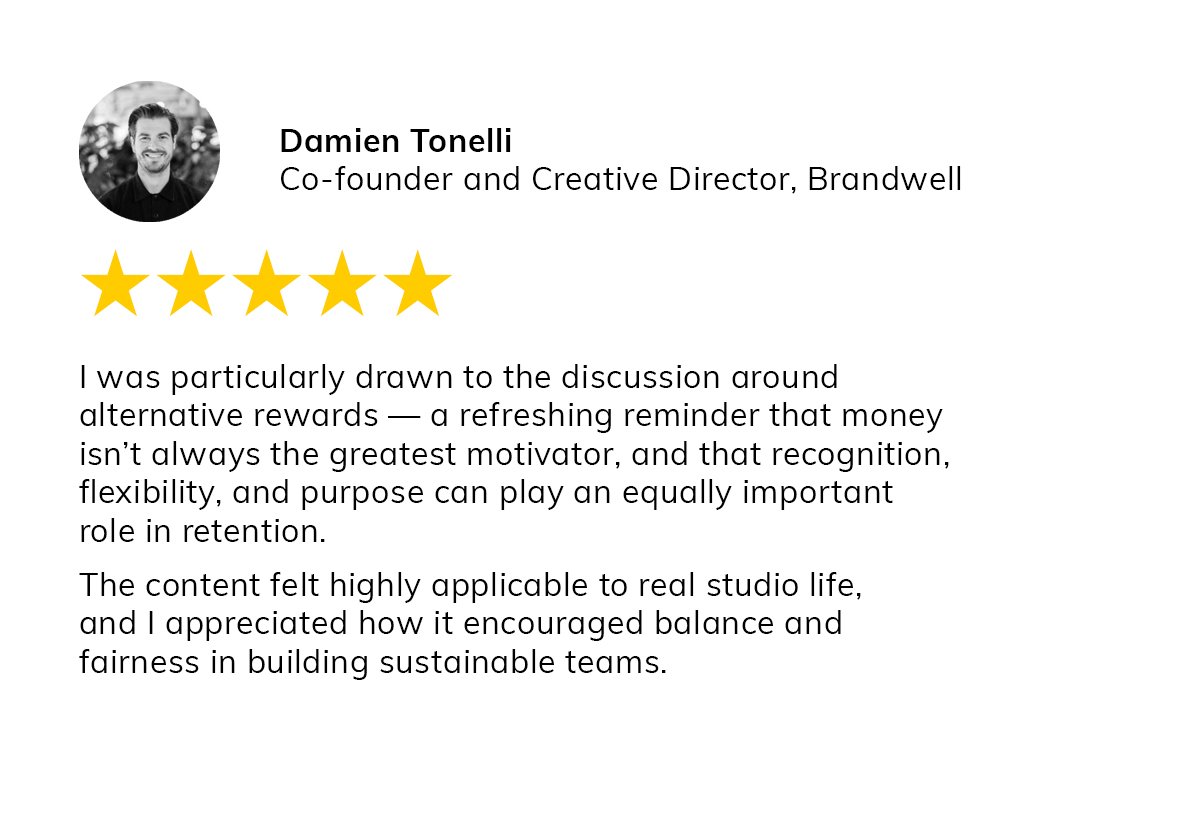
A guidebook for rewarding creatives including benchmark wages, the skills needed for 28 job titles, freelance rates, and five alternative ways to reward employees.
-
The Business of Design is the essential reference for all Australian design businesses. It contains all the information needed to start, manage and grow a design studio.
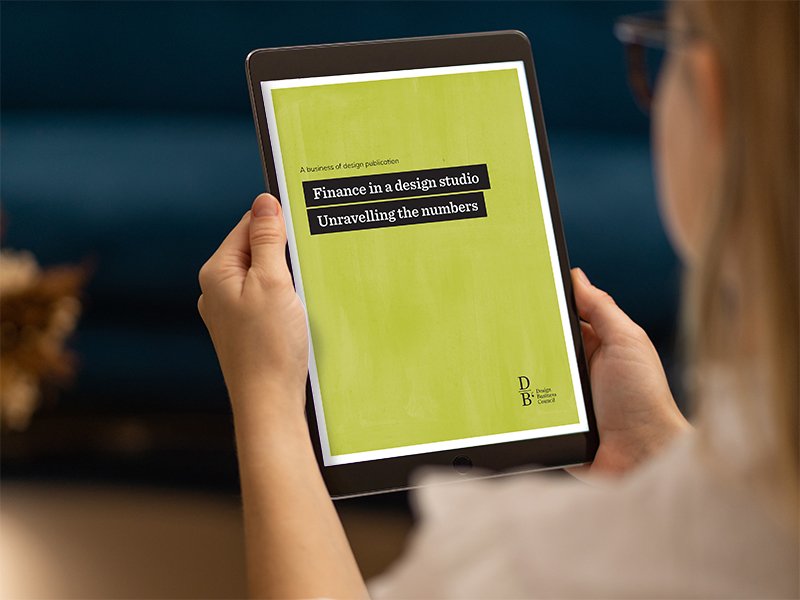
Finance in a design studio
Giving designers the financial literacy needed to run a strategic creative business.
Do you want to understand finance?
Many successful designers hit a wall when their business grows and financial conversations become more complex. Accountant meetings, cashflow discussions, grant applications – suddenly you need to speak a different language.
We wrote this book because we know what it’s like to feel brilliant in the creative room and out of your depth in the boardroom. This isn’t about becoming an accountant, it’s about gaining the financial confidence to make informed business decisions.
This is not about becoming an accountant
This isn’t about data entry or invoicing – it’s about financial strategy. While bookkeeping tracks what happened, finance strategy helps understand why it happened and what to do next.
You’ll learn to spot trends in your profit and loss statements, understand the difference between cash flow and profitability, and how to have confident conversations with accountants, bank managers, and potential investors.
Buy this ebook if you want to:
to read a profit and loss statement and why it’s important
understanding ‘real’ hourly costing vs pricing so you can estimate confidently
business cost structures and revenue models so you can grow strategically
cash flow forecasting and management so you’re less dependent on referrals
debtor management strategies — maybe you need to walk away from the ‘wrong’ clients
how to ‘see’ and solve profitability challenges
capital financing options for growth
how to build a business (as opposed to delivering projects).
Finance in a studio de-mystified
Design studios don't go bust because they can't deliver good design. They go bust because they don't manage their finances well enough to stay viable. Clients are more financially savvy than ever — designers need to be too.
This isn't about becoming an accountant. It's about understanding your numbers well enough to make good decisions, and to brief your accountant properly instead of just handing over a shoebox of receipts.
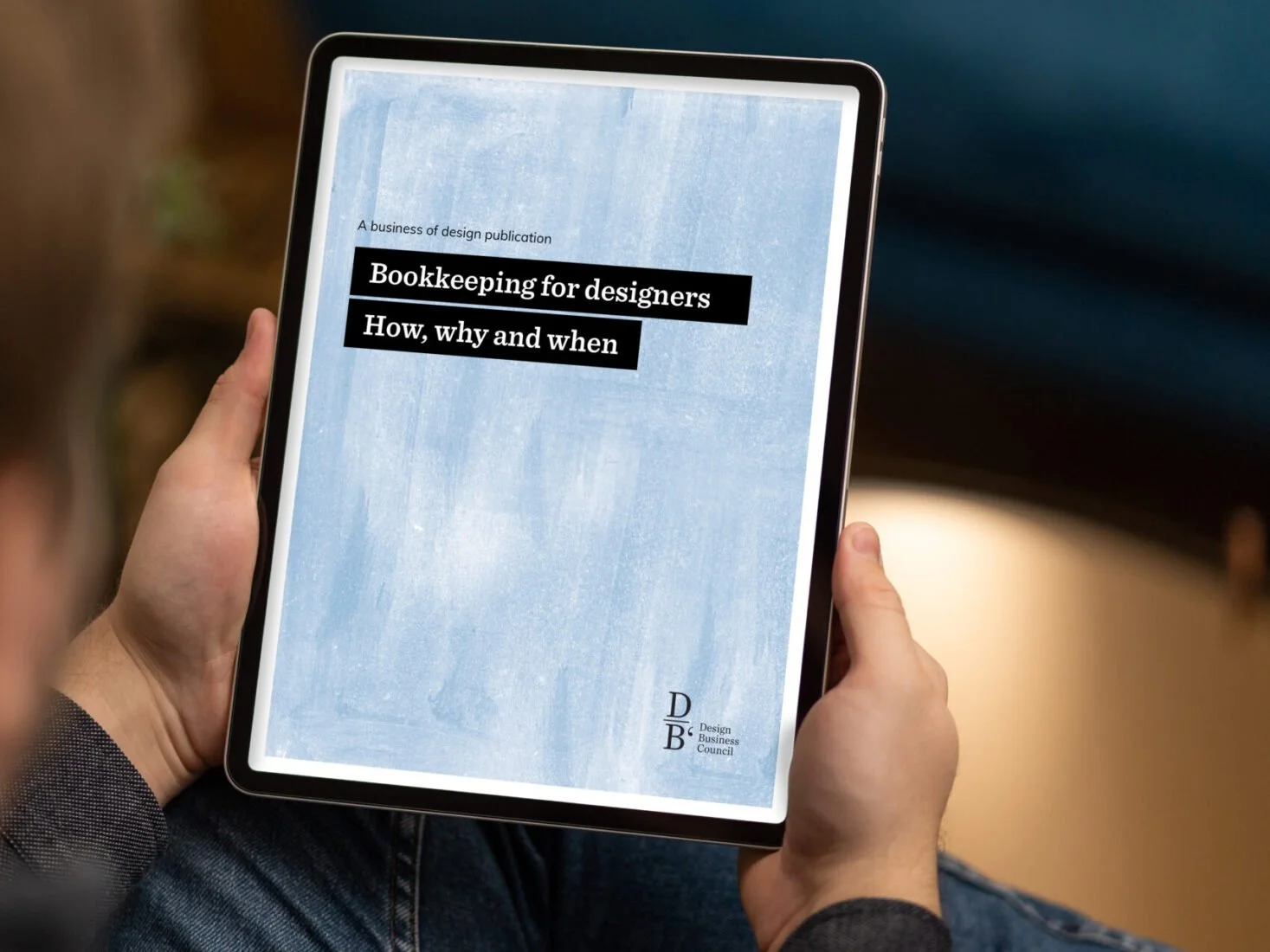
Bookkeeping for designers
An ebook written by designers for designers to build confidence and knowledge about bookkeeping.
Love design but struggle with the finance side of your business?
You are not alone. Many find it a challenge because we’re not taught the business of design.
That’s a problem because to build a robust studio, founders need solid financial knowledge.
This e-book shares what we know. It’s written from a designers point of view, by design practitioners, for designers. It’s about sharing our knowledge, not accountancy advice. I does not use accountancy-speak, spreadsheets or jargon.
It is written in plain english, using diagrams, notes and charts to explain the financial aspect of a design business. It’s not complicated, just detailed and it’s written by Australian designers by Australian designers.
Buy this ebook if you:
are considering the pros/cons of DIY bookkeeping
not sure of the job description, the cost or how to hire a bookkeeper
are unsure of the difference between sole trader/partnership/pty ltd
want to better understand spreadsheets (like cashflow)
need a better explanation of debtors and creditors
want to do your own BAS but are unsure where to start
want some FAQs. definitions and checklists
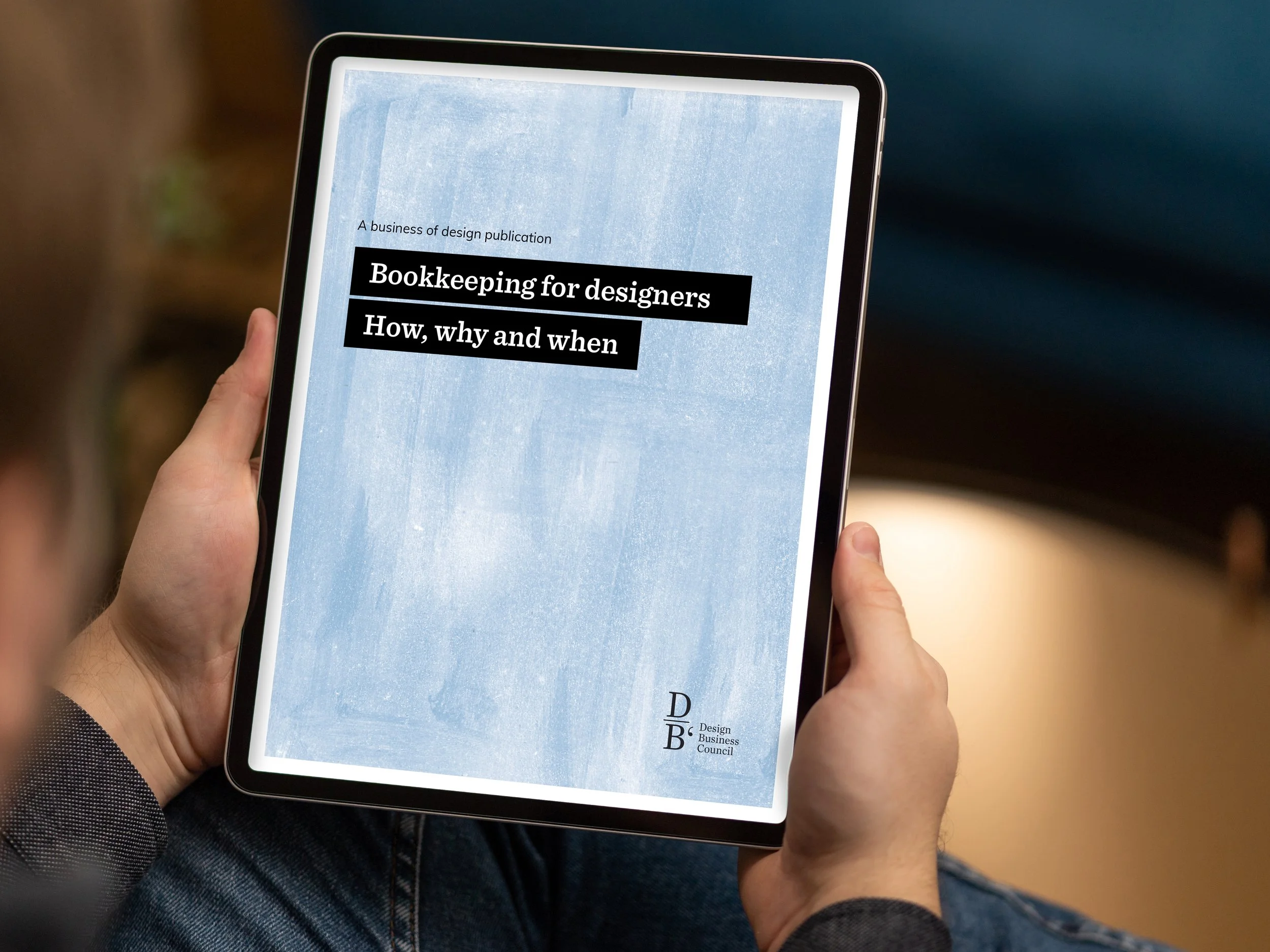
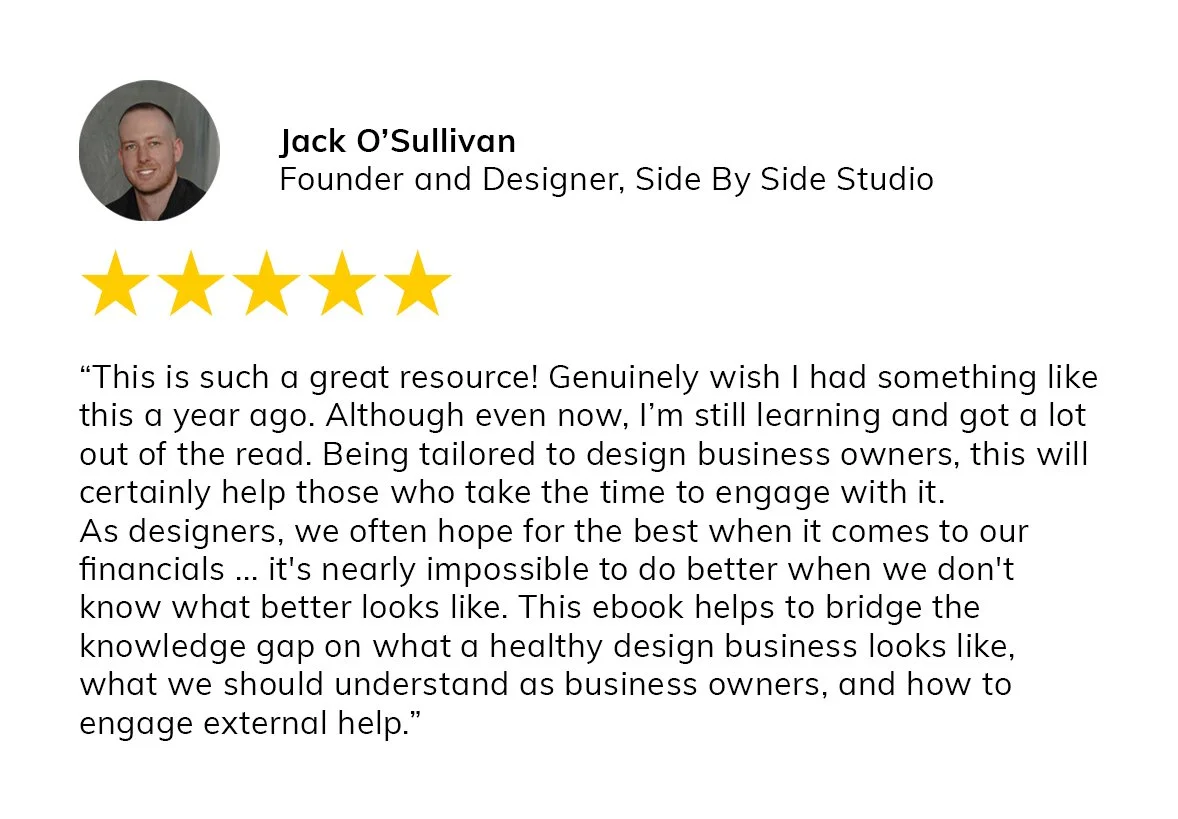
Bookkeeping probably isn't why you got into design, but ignoring it is expensive. This is a practical, illustrated introduction to bookkeeping for design studios, written for designers by design practitioners. It's about sharing knowledge, not accountancy advice — think of it as the numbers explained in a language you actually speak.
LinkedIn for designers
A step-by-step guide on using LinkedIn to find the right clients for your skillset and studio.
This ebook is specifically written for designers wanting to get more of the right type of work.
Referrals are great to start and build a business, but following referrals may not build the business you want. Better to take control and strategically target the clients and work you want.
Research shows LinkedIn is the social media platform of choice for professionals. It’s where you can build a relationship by starting a conversation with targeted clients.
Don’t have time for new business?
We know LinkedIn can be a massive time-wasting vortex. We understand that. It can feel overwhelming.
That’s why we’re very specific about how to use LinkedIn. You can use it a little bit, a bit more or a lot. You can use it by writing, or with graphics. And you can use it daily or weekly. Regardless, the important point is to use it intentionally.
LinkedIn can help you build a relationship with both new prospects and extended network.
Are you curious how LinkedIn can help:
building a professional profile that attracts the right clients and network?
start conversations without the eeek of networking?
you promote your business and skillset even if you don’t like writing?
with new business strategies and tactics?
other designers? We’ve included case studies of profiles we know work
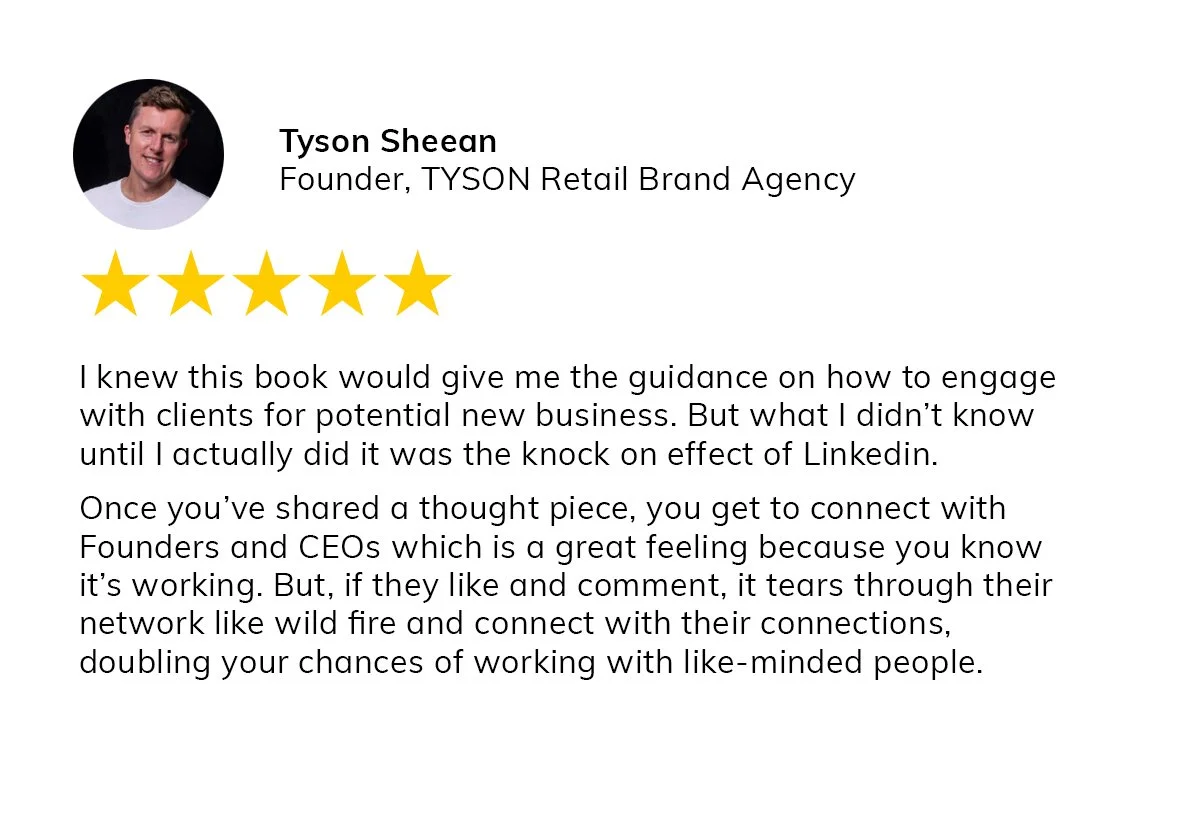
New business is hard. Most designers dread cold calling — and most clients don't want that call either. LinkedIn is the alternative: a way to be visible and build trust before anyone needs to pick up the phone.
This 52-page ebook shows you how to use LinkedIn to attract new business without the awkward pitch — from what to post, to how to show up consistently, to turning visibility into real conversations.
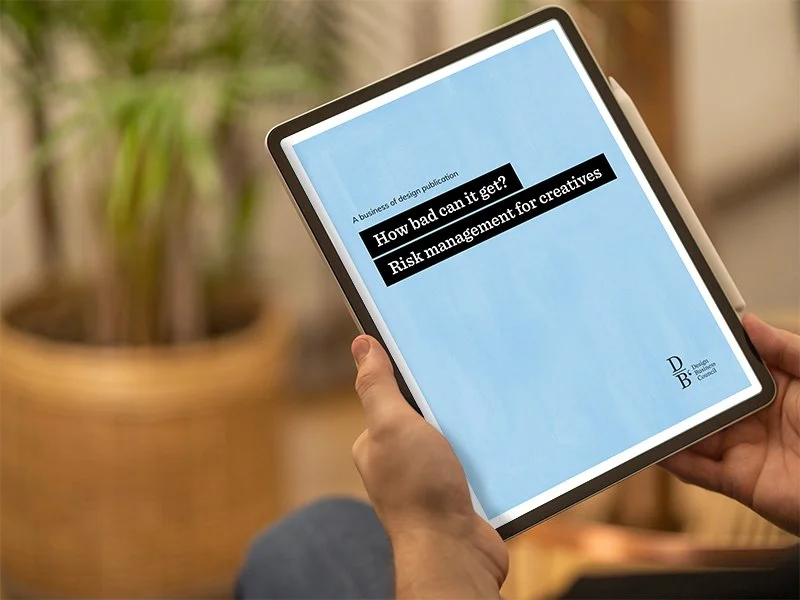
How bad can it get?
Risk Management for creatives
How to identify and avoid business-ending risks before they destroy everything you've built.
Every business is a risk
Every week we hear about talented designers whose businesses collapsed. A key employee left and took major clients. A project went wrong and led to legal action. Rapid growth created cash flow problems that couldn’t be solved fast enough.
This isn’t theoretical risk management, it’s practical survival strategies from designers who’ve seen businesses thrive and die, and learned to spot the warning signs early.
Most risks aren’t obvious
Many creative business owners focus on the obvious risks but the real business killers are the ones you don’t see coming until it’s too late.
A flood that damages computers. A successful project that grows beyond your capacity to deliver. A loyal client whose industry gets disrupted. These aren’t dramatic failures, they’re slow-motion, preventable disasters.
This ebook shows you how to spot these risks early and build defenses before you need them
This ebook is perfect for creative business owners who are:
looking for long-term strategies to build a sustainable business
concerned about the risk of rapid growth
know they don’t know what they don’t know and like to be prepared for the unexpected
responsible for other people’s livelihoods and have seen other business fail
unsure about insurance or legal needs of being a business owner
mindful of their risk to their reputation if projects are mismanaged.
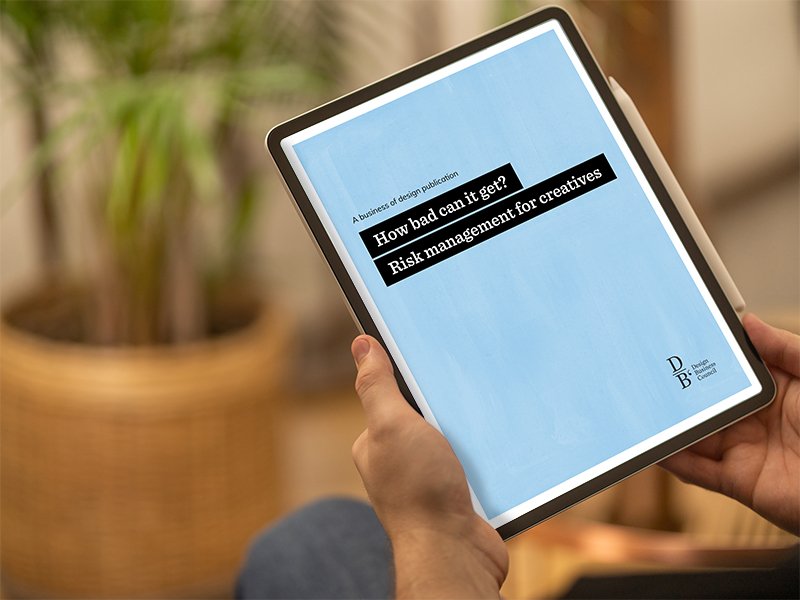
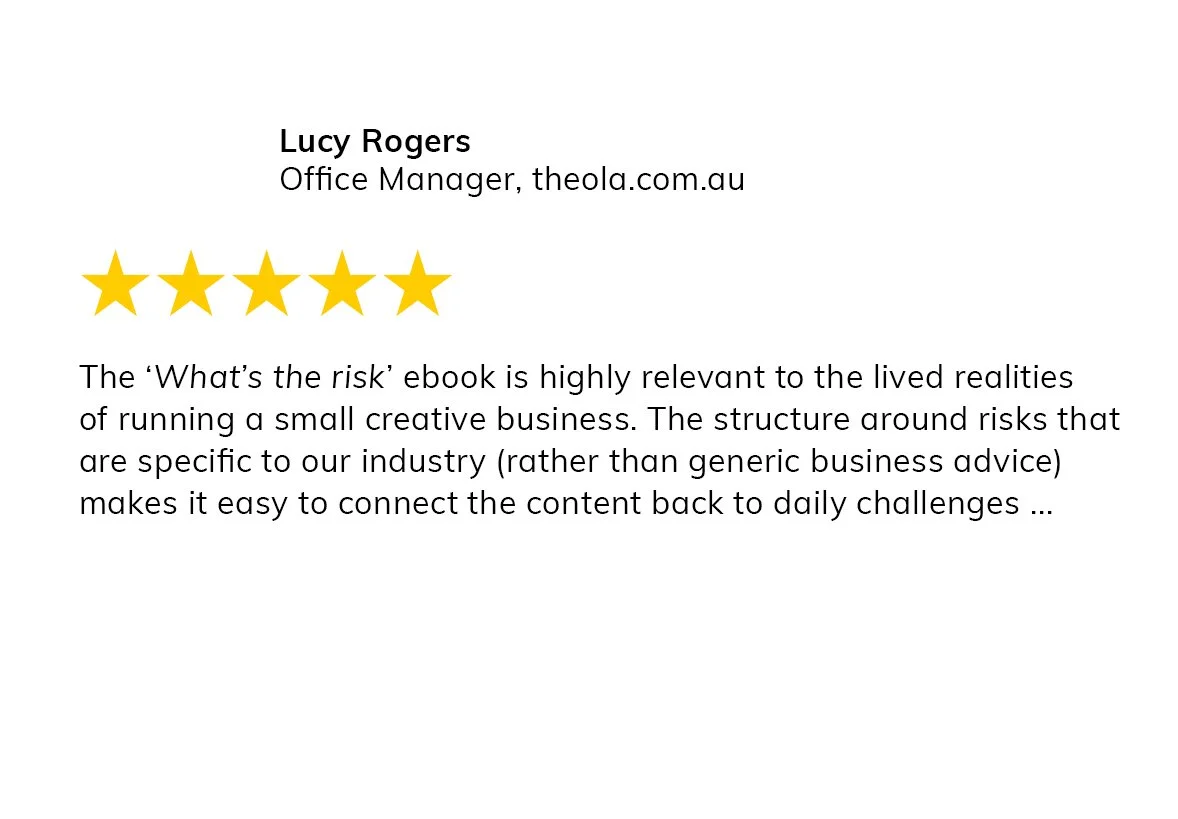
Every week we hear about talented designers whose businesses collapsed — a key employee left with the clients, a project went wrong and ended in legal action, rapid growth broke the cash flow. These aren't dramatic failures. They're slow-motion, preventable disasters.
This ebook covers six areas of risk — reputation, unplanned growth, health, financial insolvency, intellectual property and failure to innovate — and how to spot the warning signs early, before they become business-ending.
Written from 30 years running a studio, not theory.
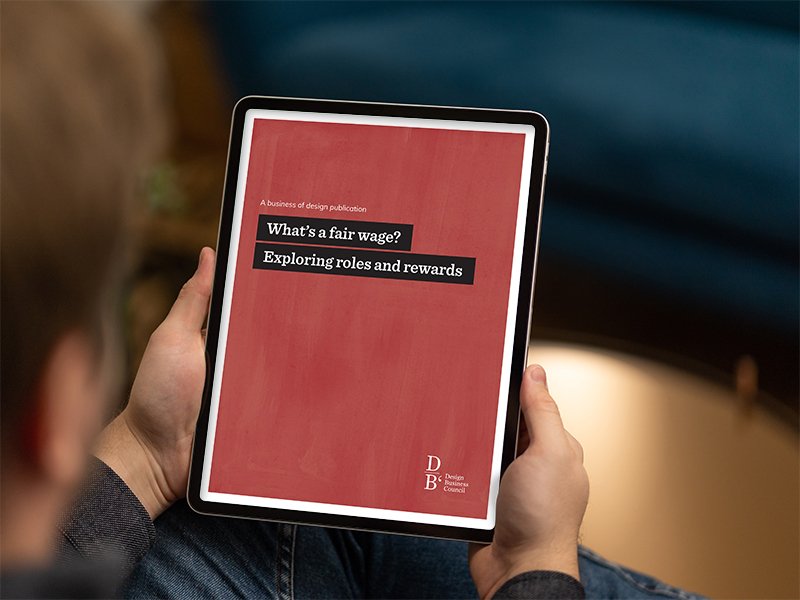
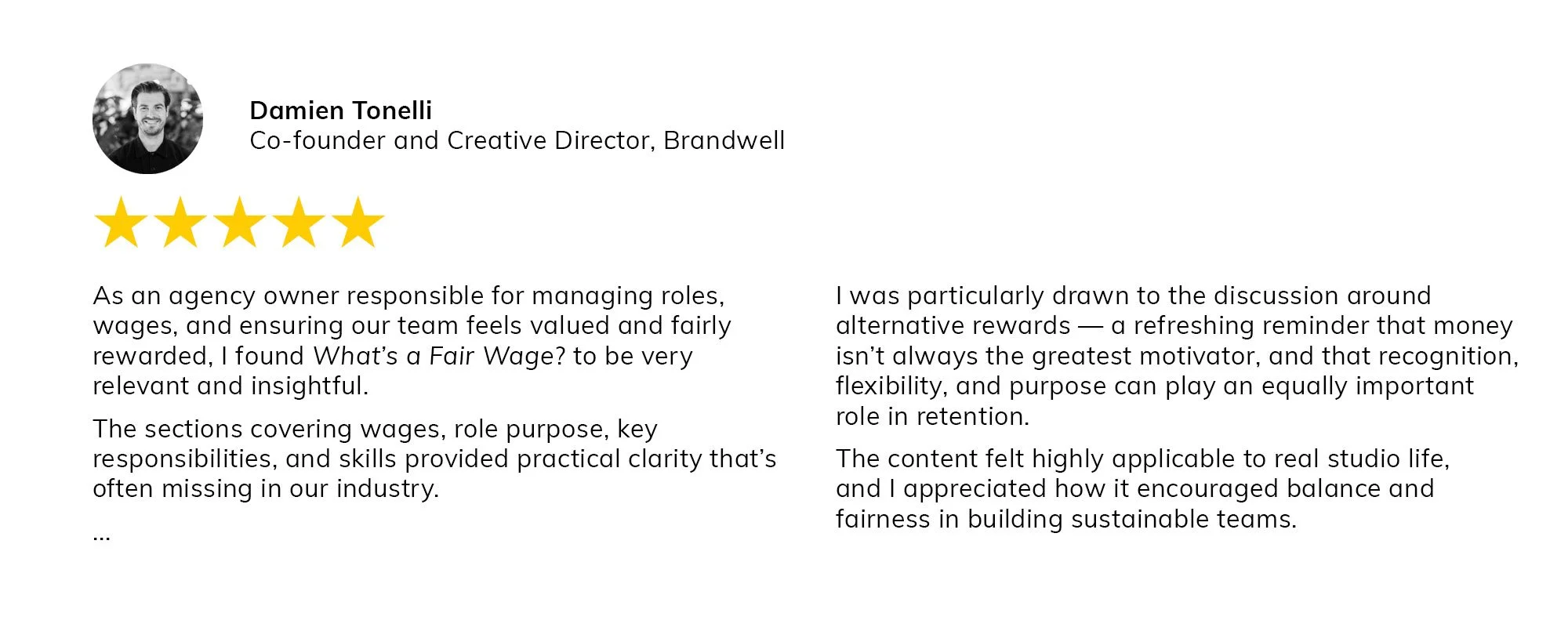
What’s a fair wage?
Relevant, practical benchmarks for wages, job descriptions, freelance rates and alternative ways to reward employees.
Is your salary based on hearsay and guesswork?
It’s difficult to move the wage discussion from subjective ‘but I work hard‘ to objective ‘here’s an industry-wide benchmark‘ without evidence. Decisions are based on what we think rather than what we know.
That’s tough for everyone, so we gathered existing research and combined it with our experience mentoring Aust businesses. This ebook contains accurate salary ranges, validated benchmarks, job descriptions and suggested alternatives to dollar-based rewards.
We’re sharing what we know about fair wages. It’s written from ‘inside’ the creative industry, by design practitioners, for creative leaders. It’s about sharing our research and experience, not generic HR advice.
What makes wages fair?
There is often confusion around what constitutes fair compensation in the creative industry, when employees deserve raises, and how to reward talent when cash flow is tight. We understand that. Managing expectations around money can be emotionally charged.
Fair wages aren’t just about the money. They’re about recognising experience, hard skills, and human skills. Sometimes the best reward isn’t money at all – it’s time, investment in learning, or feeling genuinely valued.
This ebook helps you move from subjective, arbitrary decisions to industry benchmarks and structured approaches that work for both employers and employees.
Here’s what you’ll get from this ebook…
benchmark wages and industry freelance hourly rates for 28 job positions, including started vs top-of-the-range wages
the skills needed to move up the pay scale — perfect for those promotion discussions
detailed job descriptions, valuable if you employ or planning to employ creatives
alternative ways to reward employees — it’s not all about the money
when and how to get or give wage increases
‘wages compared to revenue’ ratios, taking the guess work out of promotions
strategies to reward by investment.
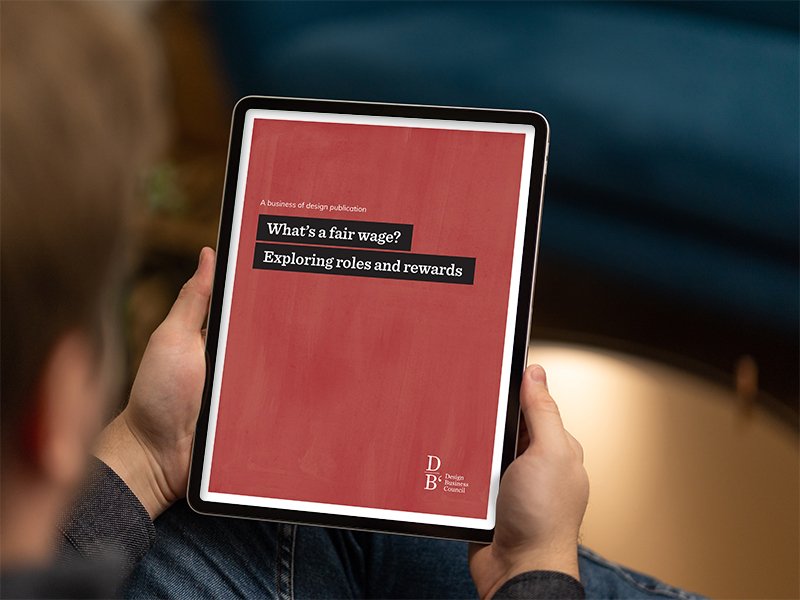
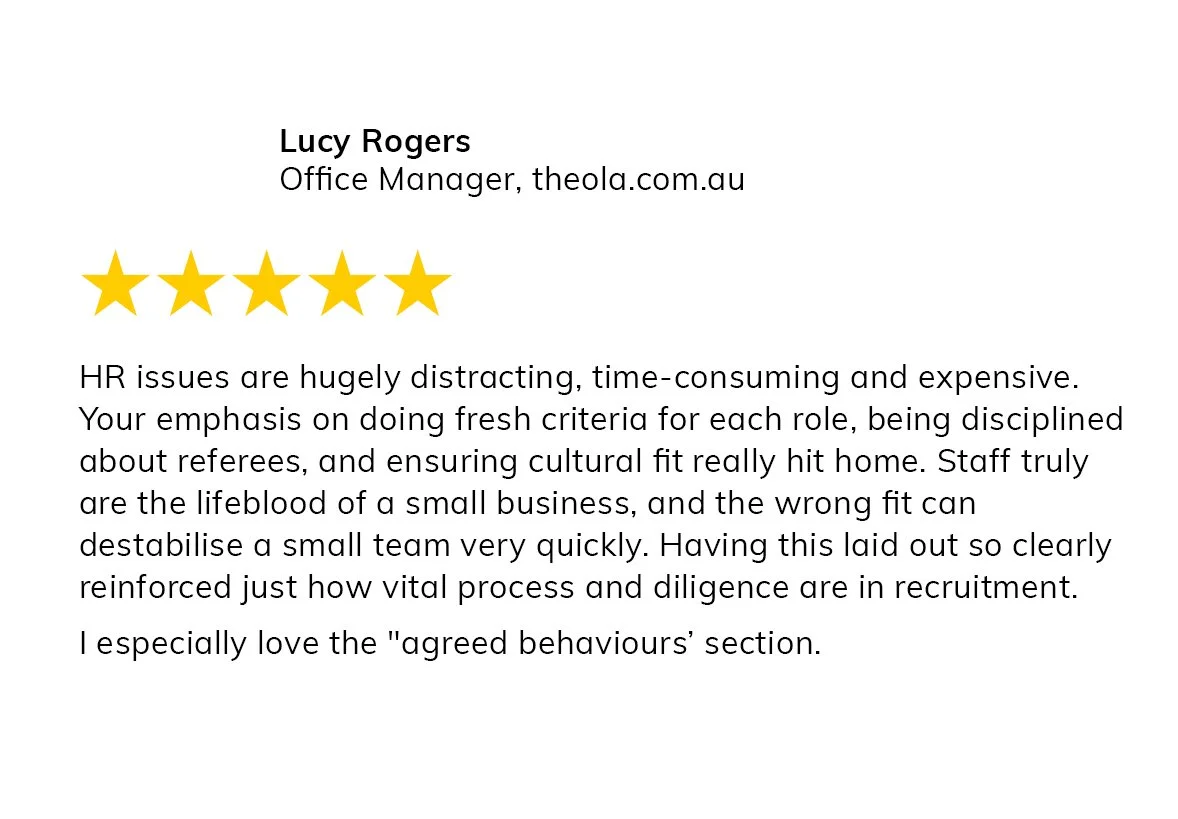
The creative industry has never been unionised or covered by a relevant State award, so pay rates have always been arbitrary — set by hearsay and market demand rather than anything solid. That's a problem whether you're a studio owner setting salaries, an employee wondering if you're being paid fairly, or a freelancer trying to work out what to charge.
This guide gives you real benchmark data, so you're working from actual numbers instead of guesswork — whoever's side of the pay conversation you're on.
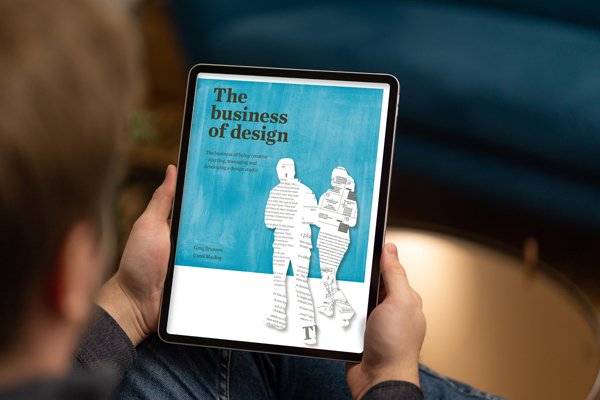
The Business of Design publication
An book about founding, managing and building a creative business.
Do you love design but struggle with the finance side of your business?
The Business of Design is the essential reference for all Australian design businesses. It contains all the information needed to start, manage and grow a design studio.
It’s a practical tool written from a completely local perspective. It’s about the Australian design industry, written for Australian creatives, by two Australian design practitioners. The content is relevant to micro-, mid- or a large studios. They all face similar challenges.
This is just a snapshot of what’s inside …
the Australian design scene – a snapshot of our industry
how to plan a design business – what to do now, and the next steps to take
costing, budgeting and (best of all) how to explain design value to clients
how to grow a studio, where to get new business
financial management, from managing debts to financing your business
the design business model canvas and what makes it invaluable.
TESTIMONIAL
‘The book is a brilliant read for anyone considering starting, or being in the first few years of running their own design studio. The book is written in simple language, taking a billion complex business concepts and ordering them into a concise, logical and easy to follow read.
I’m an avid student of business myself, I’ve completed the Entrepreneurial Masters Program at MIT in Boston. The more I learn about business, the more clearly I see the many challenges that are unique to running a design business. The Business of Design is incredibly detailed, thorough and specific. It is without doubt the most comprehensive and relevant book ever published in Australia to cover this subject.
Dave Ansett, Entrepreneur, Founder Truly Deeply, Victoria
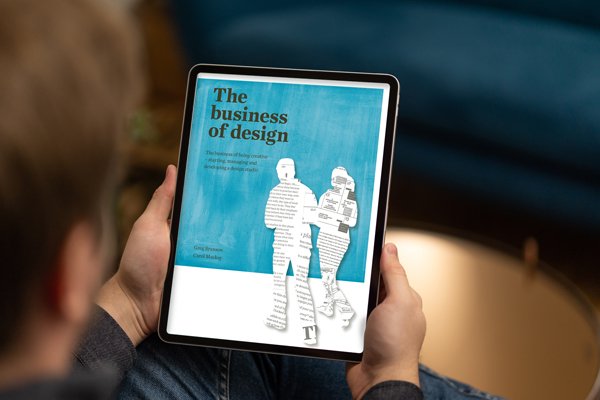
The reference we wish we'd had when we started. Written from our 30 years running a studio, The Business of Design covers what you actually need to start, manage and grow a creative business — pricing, positioning, team, and the decisions design school never taught you.
Immediate download.